
Deck and Dock Staining in Carteret County, NC
Wood near the water takes a beating. A good stain keeps it from turning gray, splitting and soaking up water.
What happens to bare wood on the coast
Sun breaks down the surface of unprotected wood in a single season. It grays out, the grain opens up, and water starts getting in. Add salt and humidity and you get splitting, cupping and soft spots. Docks sitting right over the water get it worst.
Stain slows all of that down. It blocks UV, sheds water and keeps the wood from drying out and cracking. But it only works if it can soak in, and it can't soak into dirty, mildewed or flaking wood.
So we start with a deep clean, give the wood time to dry, take care of any old finish that's failing, and then apply the stain. That's how the Beaufort deck in our gallery was done, and it's how we do every dock and porch.
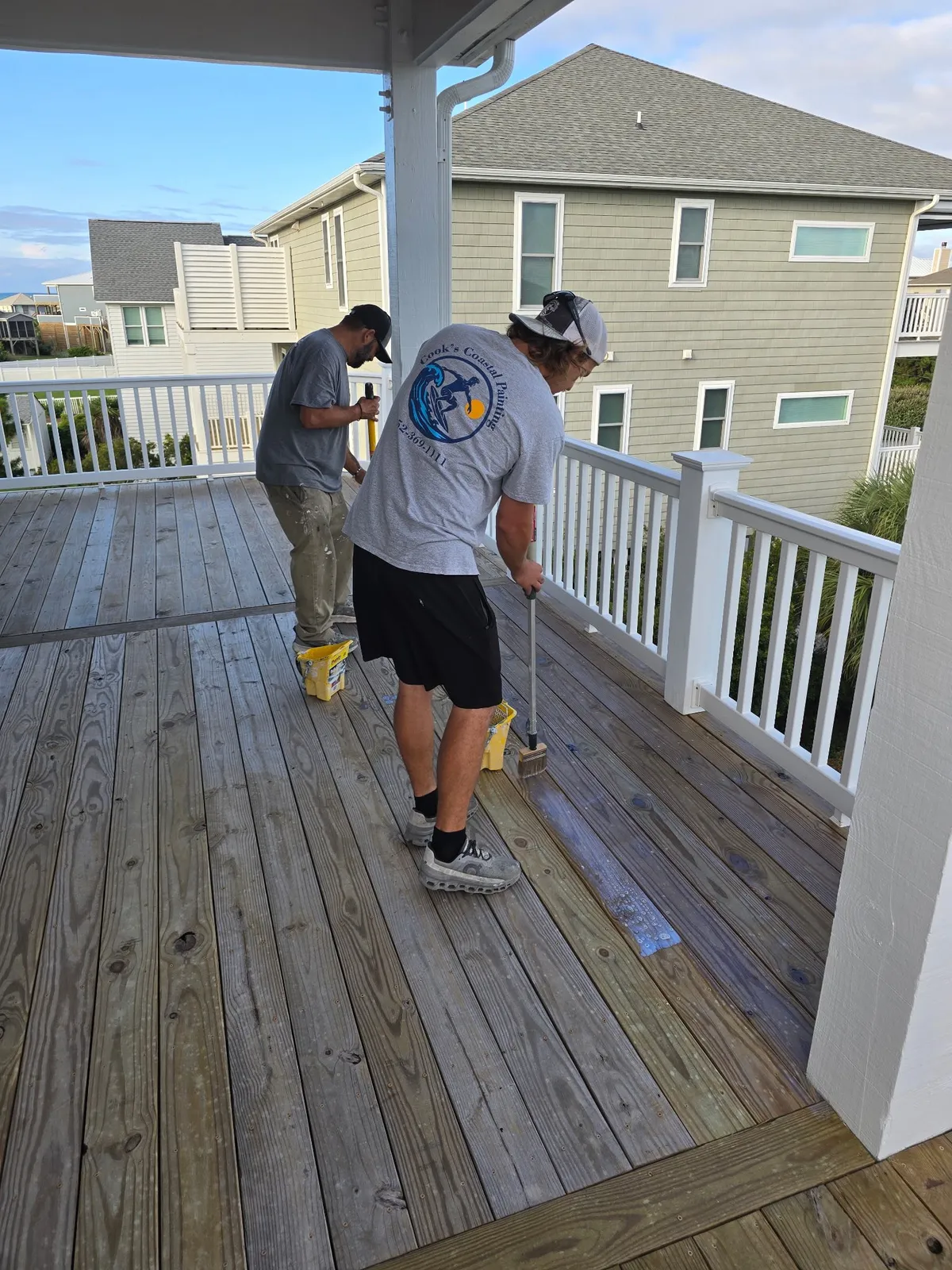
Wood we stain and protect
Decks
Ground level decks and raised decks, cleaned and stained so they're comfortable underfoot again.
Docks and piers
The hardest working wood on the coast. We protect it from the water up.
Porches and porch ceilings
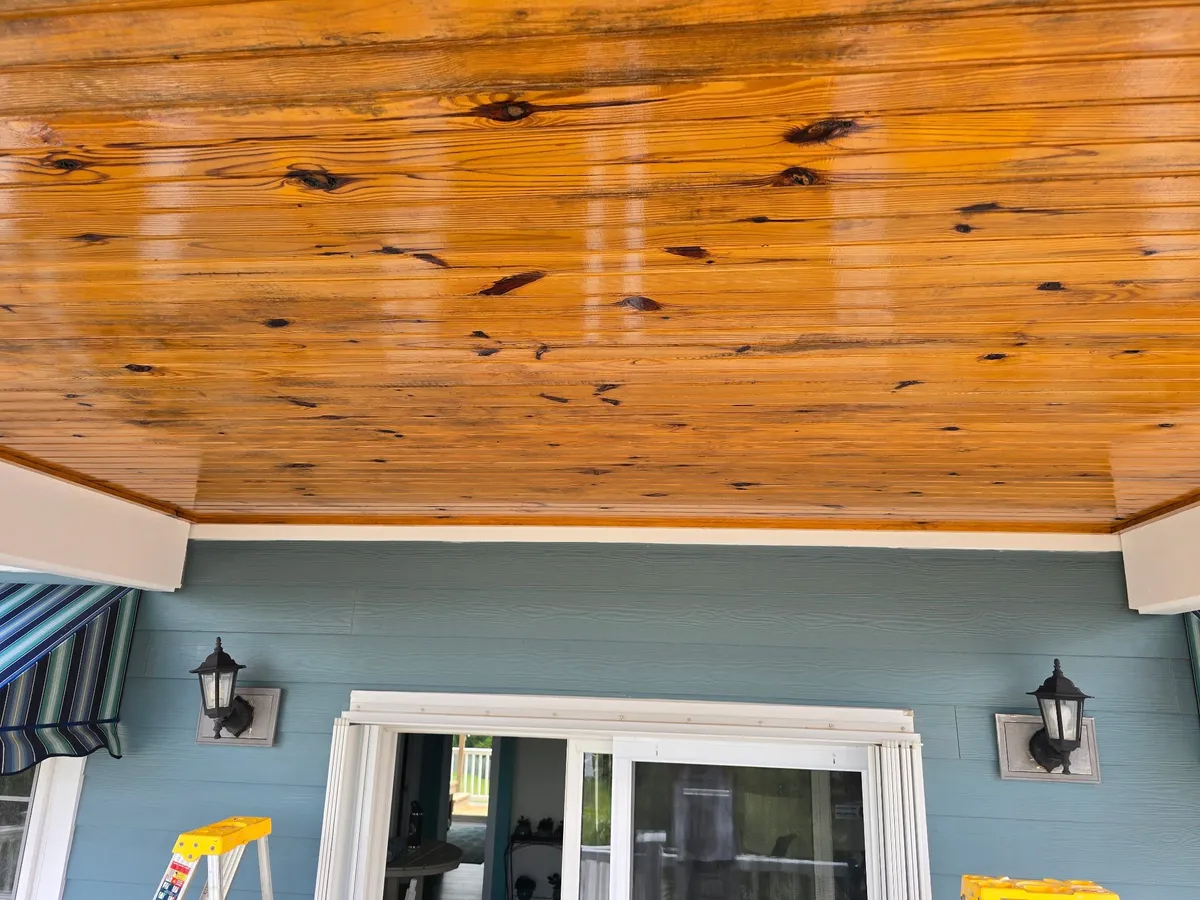
Tongue and groove ceilings and porch floors finished to match the house.
Trim and outdoor wood
Railings, steps, pergolas and other exterior wood that needs protection.
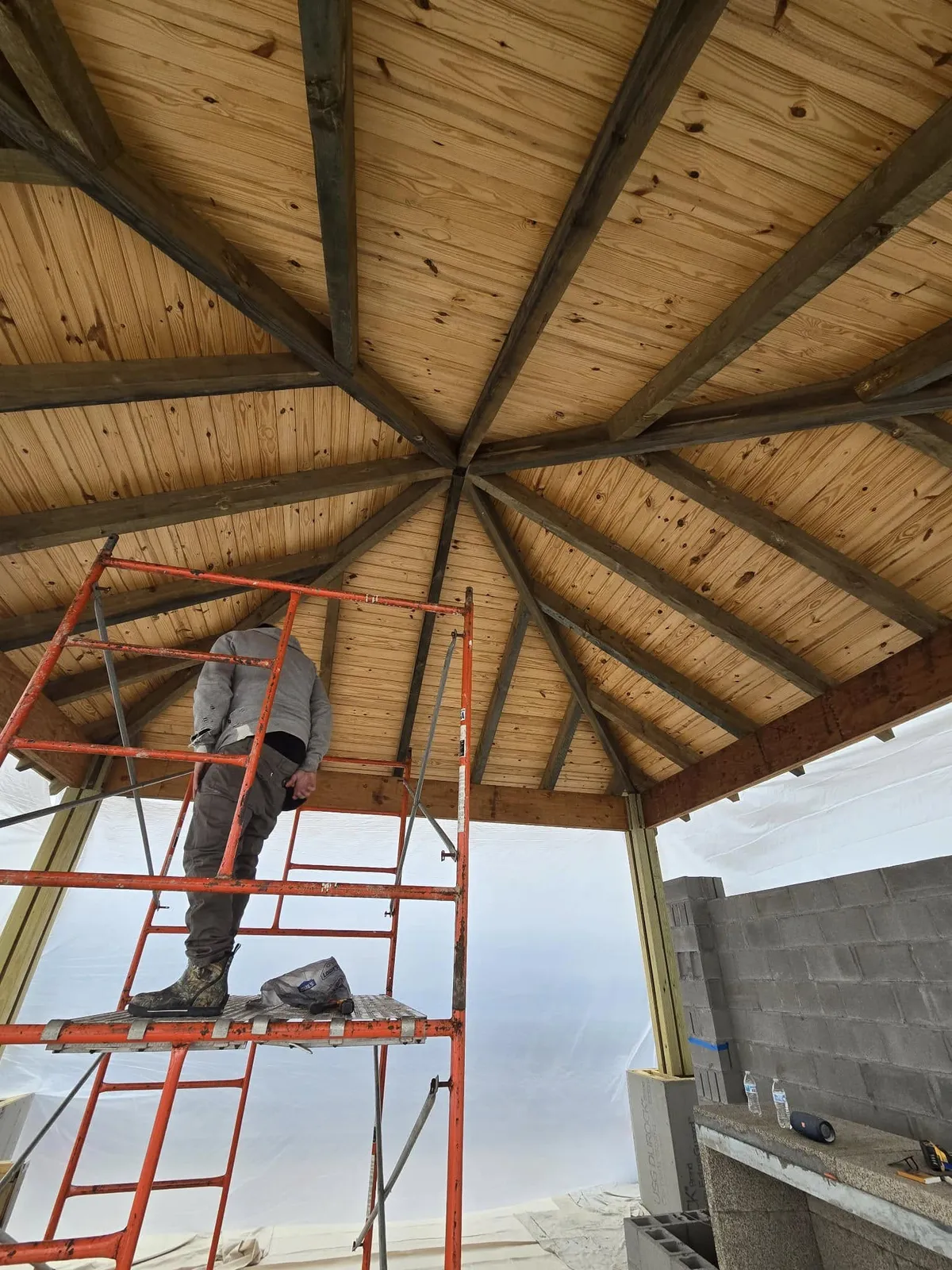
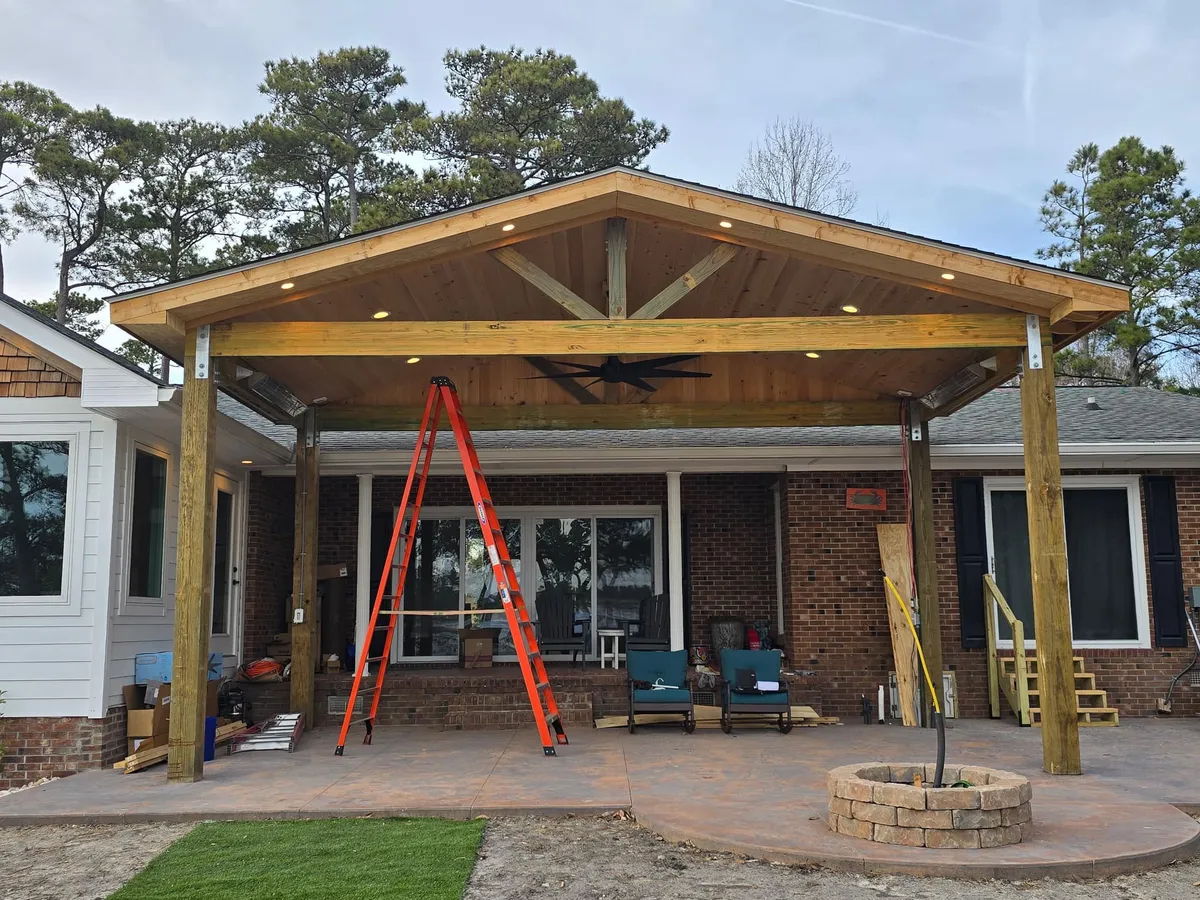
Recent staining work
Choosing the right stain
Stains run from clear to solid. A clear or transparent stain shows off the most grain but needs recoating the soonest. Semi-transparent gives you color and grain with more protection. Solid stain looks a lot like paint, hides the grain and lasts the longest.
On a dock in full sun, the lighter stains wear the quickest. We'll show you the options and be honest about how each one is going to age where you live.
Signs your deck or dock needs attention
Gray, faded boards are the first sign the old stain is gone. After that come splinters, raised grain, and water that soaks straight in instead of beading on the surface.
Dark spots and green film mean mildew or algae has moved in, and loose or soft boards mean water has been getting in for a while. The earlier we catch it, the more of the wood we can save.
How a staining job goes
- Look it over. We check the boards, rails and fasteners and tell you what we see before we quote.
- Clean the wood. Dirt, mildew and old failing stain come off so the new stain can soak in.
- Let it dry. Wet wood won't take stain, so we give it time. This is where rushed jobs go wrong.
- Apply the stain. Even coats on the boards, rails and edges, worked in so it doesn't sit on top and peel.
- Walk it with you. We look at the finished job together before we pack up.
Docks need a little extra care
A dock takes more abuse than a deck. It sits over salt water, it gets splashed and sunbaked every day, and the boards stay damp longer. That means cleaning has to be gentle enough not to raise the grain, and the stain has to be a product made for that kind of exposure.
It also means docks usually need attention more often than a backyard deck. Keeping up with it every couple of seasons is a lot easier than bringing back boards that have gone gray and rough.
Staining questions
How often does a dock need to be restained?
It depends on sun and water exposure and the type of stain. A simple test is to splash some water on the boards. If it beads up, you're still protected. If it soaks right in and the wood darkens, it's time.
Can new pressure treated wood be stained right away?
Usually not. New pressure treated lumber is still wet from treatment and needs time to dry before it will take stain. The same water test works here. When the water soaks in instead of beading, the wood is ready.
When is the best time of year to stain?
A dry stretch with mild temperatures and no rain in the forecast for at least a day after. Spring and fall are often the sweet spot on the coast, since midsummer sun can dry stain too fast.
How long do I stay off a freshly stained deck?
It depends on the product and the weather. Light foot traffic is often fine the next day, and furniture can usually go back a little after that. We'll give you the timing for your stain before we leave.
Do you replace damaged boards?
We'll tell you which boards are in rough shape when we look at the deck or dock. Small fixes can sometimes be handled during prep, and anything bigger gets talked through first so you can decide.
Protect your deck or dock
We'll come look at the wood, tell you what it needs and give you a free quote.
Cook’s Coastal Painting (CCP)
Proudly serving Carteret County & surrounding areas with over 20 years of experience. From painting to power washing, staining, and coatings we deliver quality work you can trust, every time.
Quick links
© Cook’s Coastal Painting LLC. 2026. All Rights Reserved. Powered by Clear Future Consulting Services